
Where is the Market Heading?
Recently, I have seen many articles stating that the stock market will drop by 5%-20% by the end of the year. Despite these many predictions by pundits, analysts, and economists, no one knows the market’s future direction—even if they…
Published October 11, 2021 · 3 min read
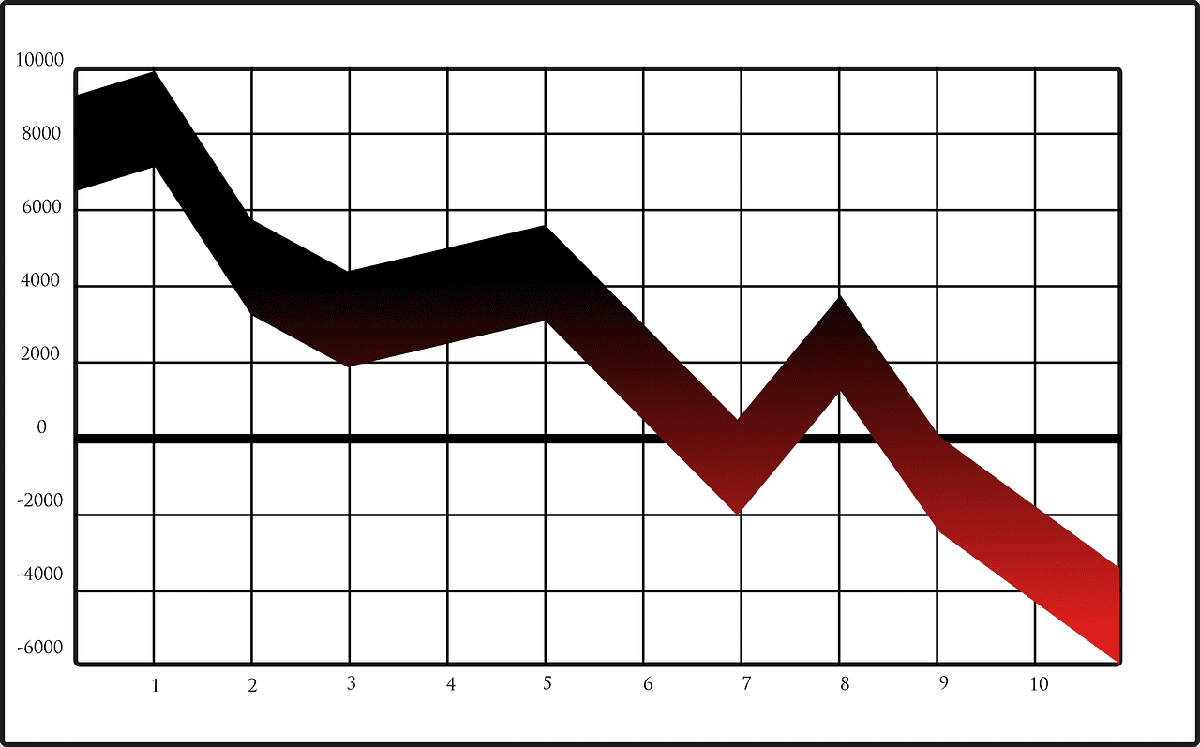
Recently, I have seen many articles stating that the stock market will drop by 5%-20% by the end of the year. Despite these many predictions by pundits, analysts, and economists, no one knows the market’s future direction—even if they guessed right previously. I can say this with certainty because the world doesn’t have a trillionaire.
Market Cycles
The truth is that the market has cycles, and, historically, the market has a significant correction every 6-7 years. So, hypothetically, if a stock market doesn’t have a substantial correction for six years, you can predict that there is a correction right around the corner and be right reasonably often.
Periodic market downturns are inevitable. People try to time markets by selling all their stocks when they are high and buying back in when they are low. There are several key problems with this strategy:
The Downsides of Market Timing
Studies have shown that investors who try to time the market end up selling low and buying high—the exact opposite of the behaviors that will make you money. A significant reason for these investing errors is a concept called behavioral finance—it is the study of how psychology affects our ability to make rational investing decisions. For instance, investors often hold losing positions rather than feel the pain associated with taking a loss.
Another downside to this strategy is that you will pay capital gains taxes when you sell your stocks in anticipation of market losses. Suppose that you purchased a stock for $100, and it increased in value to $250 over three years. Then, you sell all of your stock in anticipation of a market correction. You may owe $30 of your $150 in gains in taxes. That might not sound like a lot, but it means that you won’t be better off using this strategy unless you can buy back that stock for less than $220.
Lastly, history has shown that market corrections end on a single day of substantial gains. Most investors who time the market miss that single-day turnaround and end up missing most of the benefit of their strategy.
A Better Question
Instead of asking where the market is heading, a more useful question is whether your plan is built to handle wherever it goes. If your portfolio matches your time horizon and your emergency needs are covered, you don’t need an accurate forecast to stay on track.
Forecasts make for entertaining headlines, but they are a shaky foundation for financial decisions. Pundits who correctly predict one decline often miss the next one, and the cost of acting on a wrong forecast can be high. Focus instead on the parts of investing you can control.
One Final Thought
Here’s one final thing to ponder—I’ve never heard of a self-made billionaire who said, “I made it all from day trading!” Wise investors know that markets have cycles and need to keep their emotions in check when the roller coaster is in full swing.