
Fed Policy Impedes Our Freedom
In recent years, the Federal Reserve (the Fed) has become a major influence over the health of our economy. I have been contemplating the long-term effects of the Fed’s quantitative easing policy and I am worried that…
Published October 13, 2020 · 4 min read
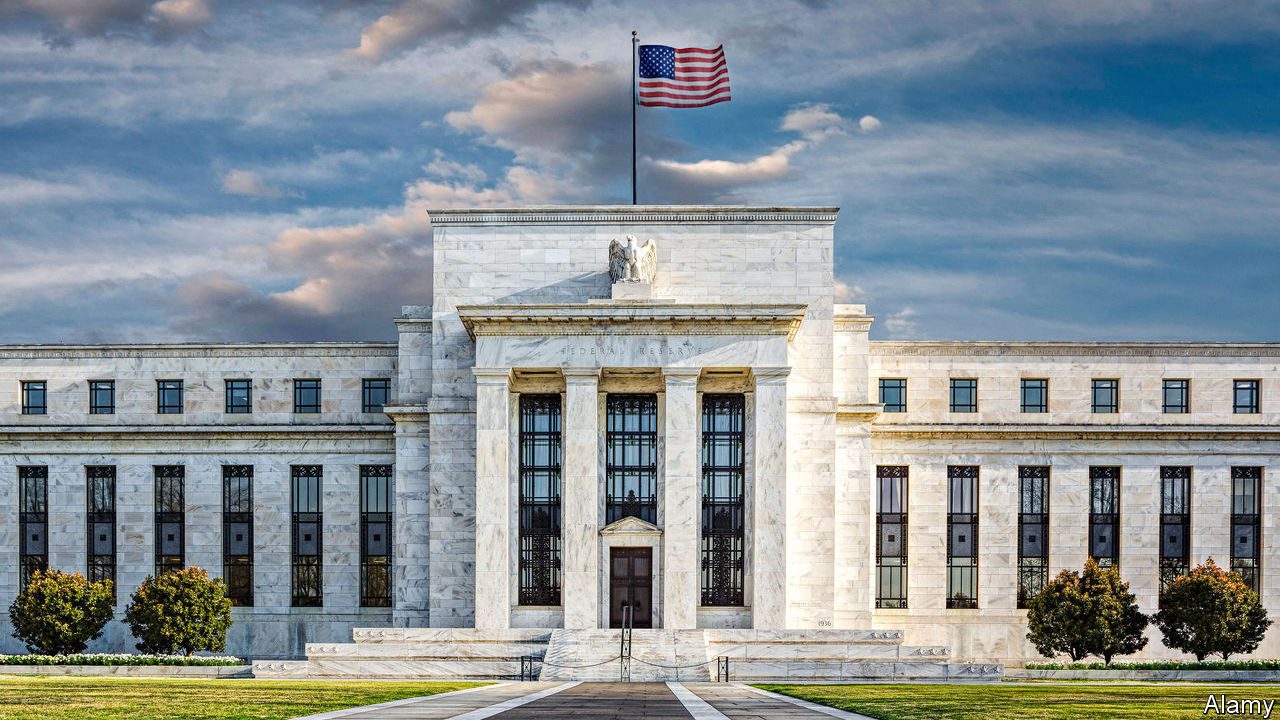
In recent years, the Federal Reserve (the Fed) has become a major influence over the health of our economy. I have been contemplating the long-term effects of the Fed’s quantitative easing policy and I am worried that our freedoms are being eroded before our eyes with broad fanfare. I am going to explore my thoughts in this email and hope you join me for the journey.
Ray Dalio is one of the most successful investors of all time. He created a short clip on YouTube to explain how the economic machine works. This is one of the best (and simplest) explanations that I’ve seen about how the economy works.
The Federal Reserve Act of 1913 mandated that the Fed maximize employment, stabilize prices, and moderate long-term interest rates. The Fed controls interest rate which has a major impact on borrowing and the expansion (or contraction) of the economy. This puts the Fed squarely in the heart of the success or failure of our economy—that’s a lot of pressure!
Leading up to the 2008 economic crisis, the US government would lower interest rates and borrow money in the form of bonds to fund economic recoveries. Because government bonds are paid back over 10-30 years, and economic disasters have occurred more frequently than that, these methods of funding economic recoveries began to grow the national debt exponentially.
Then, during the 2008 economic crisis, the government instituted a quantitative easing policy—a relatively newer method of funding economic recoveries that had been championed by the Japanese years before. Quantitative Easing (QE) is where the government prints money to buy private assets—it is an accounting trick of swapping one asset for another with minimal cost. The Fed’s foray into QE came from the Trouble Asset Repurchase Program (TARP) where they bought up mortgage-backed securities (MBS).
If you recall, back in 2008-2012, there were a lot of borrowers that lost their jobs and started walking away from their mortgages. Banks had created a securities product that packaged mortgages together—these were known as mortgage-backed securities (MBS). Once people started walking away from their mortgages, MBS’s started dropping in value. What made it worse was that (1) the mortgage originators kept poor records and (2) financial institutions leveraged their acquisition of these securities which caused exponential losses. Because no one know the true value of the MBS’s, trading halted, it gridlocked the financial sector, and threatened to upend once-stable banks and financial institutions.
Problems with Quantitative Easing
Conceptually, once the Fed buys private assets, they are supposed to sell them back to the private markets so they can be reabsorbed into the economy. Before the 2008 financial crisis, the Fed’s balance sheet (the net value of all its assets) was hovering just under $1 trillion. It ballooned to $4.5 trillion by 2015 after all toxic assets had been removed from the economy. The Fed started selling back its assets in 2018, but with the recent pandemic shut-downs, it is now projected that the Fed’s balance sheet is going to top $9 trillion in the next couple of years.
Here is why I have a problem with QE:
-
Politicians in Washington DC believe that they have found a way to cheat the system with no side effects. The issue when you hook a child on candy without limitations is that you get fat adults. I believe that politicians will continue to use QE as a method to resolve economic crises. This is a short-sighted view because instead of exponentially growing the national debt, QE grows the Fed balance sheet instead which is not sustainable.
-
Most importantly, when the Fed is buying private assets and not relinquishing those assets back to private citizens after the economic disaster has run its course, it begins to encroach on our personal property rights because they now have direct control over markets. As an investor, I am now in direct competition with a government entity that can literally print money. By failing to unwind QE, the Fed has subtly stolen our freedoms, centralized power in the government, and has obtained significant power over the free markets.
The Fix
Politicians need to realize that there are no short-cuts when you outspend your income. What needs to happen to fix this issue is that
-
government expenditures need to be limited to 80% of the tax revenues every year,
-
the 20% of unspent tax revenues need to go towards the national debt and a sovereign fund,
-
the size of the government needs to be forcibly shrunk so that expenditures can stay within the 80% limitation, and
-
the Fed needs to unwind all QE within six years of the declaration of a recession.